
When Should You Use Tactile Tiles Instead of Tactile Studs?
- eliteinformationte
- Feb 12
- 4 min read
Tactile indicators are essential elements in accessible design. They guide visually impaired individuals, alert pedestrians to hazards, and improve overall safety in public and commercial spaces. While tactile studs are commonly used for warning and directional purposes, there are many situations where tactile tiles are a far more effective and practical solution.
Understanding when to use tactile tiles instead of tactile studs is important for architects, contractors, facility managers, and project planners who want to ensure proper compliance, durability, and long-term performance.
This guide explains where tactile tiles are the better choice, why they perform differently from studs, and how to make the right decision for your project.

Understanding the Difference Between Tactile Tiles and Tactile Studs
Tactile studs are individual indicators installed one by one on the floor surface. They are typically used to create warning patterns near hazards like stairs, platform edges, or ramps.
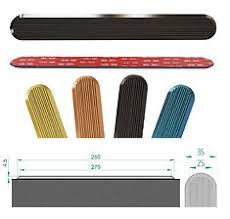
Tactile tiles, on the other hand, are pre-formed panels with raised patterns (dots or bars) that cover a larger surface area in a uniform way. These tiles are designed to provide continuous tactile guidance and warning, making them more suitable for certain environments.
The choice between tiles and studs depends on coverage needs, flooring type, installation efficiency, and the purpose of the tactile guidance.
When Large Surface Coverage Is Required
If your project requires covering a wide walking path, entrance area, platform edge, or corridor, tactile tiles are much more practical than installing hundreds of individual studs.
Tiles allow faster installation while maintaining perfect pattern alignment. They also create a consistent tactile surface that is easier for visually impaired individuals to follow without interruption.
This is particularly useful in:
• Railway platforms
• Airport walkways
• Bus terminals
• Large public entrances
• Long corridors in hospitals and malls
When Flooring Is Under Construction or Renovation
Tactile tiles are ideal when the flooring is being newly installed or replaced. Since tiles can be embedded directly into the surface, they become a permanent part of the flooring rather than an added element.
In such situations, using polyurethane tactile tiles is highly effective because they integrate smoothly with tile, marble, or granite flooring and provide excellent slip resistance.
This approach ensures durability, neat finishing, and long-term reliability without the need for drilling multiple holes for studs.
When Uniform Guidance Paths Are Needed
Tactile studs are excellent for warning signals, but they are less effective when continuous directional guidance is required over a longer distance.
Tactile tiles with bar patterns create clear directional paths that can be followed easily with a cane or underfoot. This is why tiles are often preferred in:
• Pedestrian pathways
• Ramps and corridors
• Subway stations
• Institutional buildings
The uniform design helps users navigate confidently without confusion.
When Installation Speed and Alignment Matter
Installing hundreds of studs individually requires precision, time, and labor. Any misalignment can affect the tactile pattern and reduce effectiveness.
Tactile tiles eliminate this issue. A single tile can replace multiple studs, ensuring perfect alignment and reducing installation time significantly.
For projects with strict deadlines, tiles provide a faster and more efficient solution.
When Aesthetic Integration Is Important
Tiles offer a cleaner and more uniform appearance compared to multiple studs. In modern architectural projects where design consistency is important, tiles blend more naturally into the flooring.
For premium environments and heavy-duty applications, sourcing from a reliable stainless steel tactile tiles manufacturer ensures durability along with a professional metallic finish that complements stone and concrete surfaces.
When Long-Term Maintenance Should Be Minimal
Because tactile tiles cover a continuous area and are firmly fixed into the flooring, they are less likely to loosen or shift over time. Studs, especially in high-traffic areas, may occasionally require refixing or replacement.
Tiles offer better long-term stability with minimal maintenance needs.
Summary: Tiles vs Studs Decision
You should prefer tactile tiles instead of studs when:
• Large surface areas need tactile coverage
• Continuous directional guidance is required
• Flooring is new or under renovation
• Installation time needs to be reduced
• Aesthetic uniformity is important
• Long-term maintenance must be minimal
Studs remain effective for small warning zones, but tiles are the smarter solution for broader guidance and coverage.
FAQs
1. Are tactile tiles more durable than tactile studs?
Yes, tactile tiles generally offer better durability because they are embedded into the flooring and cover a larger area, reducing the chances of damage or displacement.
2. Where should tactile tiles be installed?
They are best suited for walkways, corridors, ramps, railway platforms, entrances, and areas where continuous tactile guidance is needed.
3. Can tactile tiles be used on existing floors?
Yes, but they work best when installed during new flooring or renovation for proper embedding and finishing.
4. Do tactile tiles require less maintenance?
Yes. Since they are fixed as a single unit and not as multiple individual pieces, they require less maintenance compared to tactile studs.
Choosing between tactile tiles and tactile studs depends on the purpose, area coverage, and project requirements. When your goal is consistent guidance, faster installation, and long-term performance, tactile tiles are often the more effective and reliable choice.

Comments